
How to Choose a Feed Pellet Machine in Kenya: A Complete Buyer’s Guide
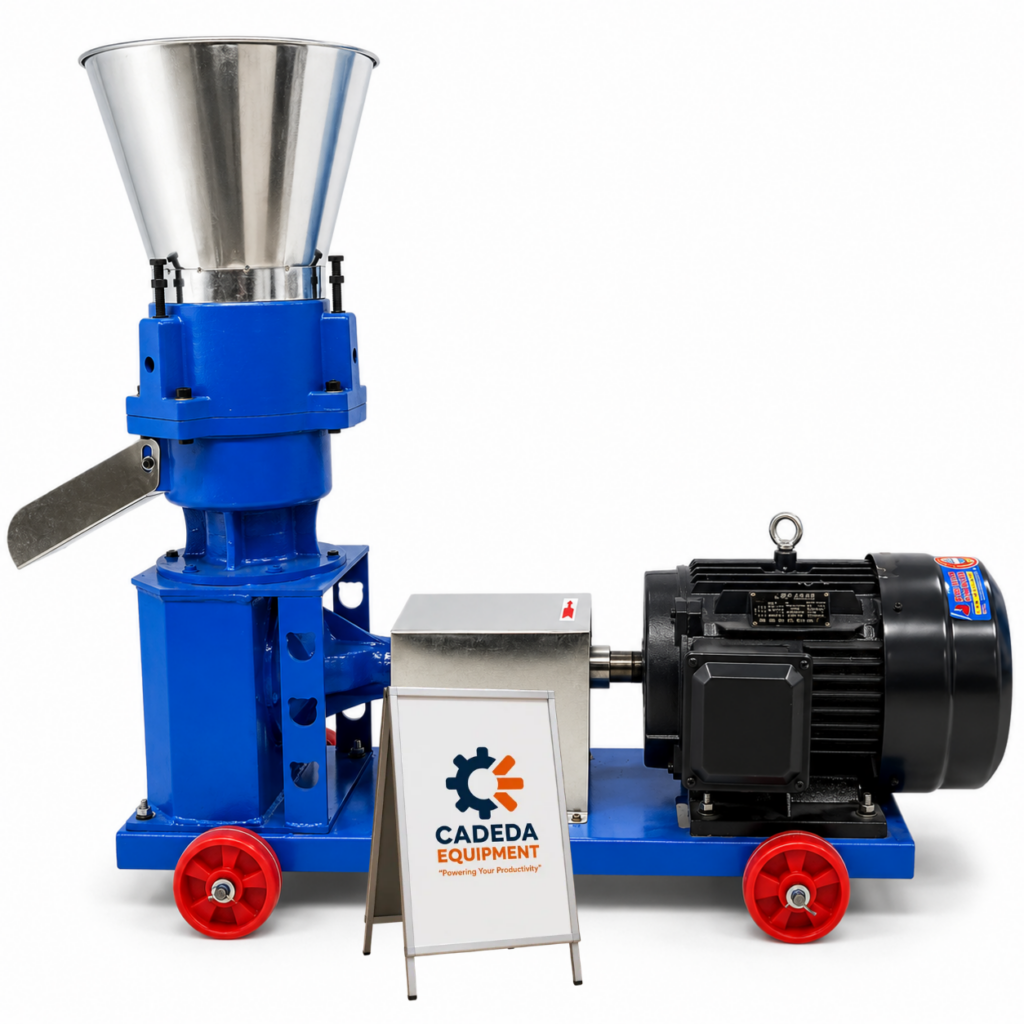
How to Choose a Feed Pellet Machine in Kenya: A Complete Buyer’s Guide
Feed costs typically swallow 60–80% of total production expenses on any livestock or poultry operation. For Kenyan farmers watching commercial feed prices climb year after year, that single line item can be the difference between a profitable farm and a struggling one. It’s no surprise, then, that more poultry farmers, pig keepers, dairy producers and fish farmers across the country are turning to on farm feed production as a way to take back control of their costs and their margins.
A feed pellet machine sits at the centre of this shift. Whether you’re a smallholder with 500 layers in Kiambu or a commercial feed manufacturer supplying agrovets across Nakuru and Eldoret, the right pelletizing equipment can transform raw, low value ingredients like maize bran, sunflower cake and fish meal into dense, nutrient rich pellets that animals convert into meat, eggs and milk far more efficiently than mash or loose feed.
This guide walks you through everything you need to know before buying a feed pellet machine in Kenya — from production capacity and power requirements to pricing, raw materials and the mistakes that cost first time buyers money. By the end, you’ll know exactly which machine fits your operation, whether you’re feeding a backyard flock or running a full commercial feed business.
Why More Kenyan Farmers Are Producing Their Own Feed
The economics are straightforward. Commercial feed prices fluctuate with maize, soya and fishmeal markets and transport costs add further strain for farmers outside major towns. Producing feed on farm using an animal feed pellet machine lets you:
- Buy raw ingredients in bulk when prices are favourable
- Use locally available by-products (rice bran, cotton seed cake, brewers’ spent grain) that commercial millers may not fully utilise
- Control exactly what goes into your animals’ diet, improving consistency and traceability
- Turn a cost centre into a revenue stream by selling surplus pellets to neighbouring farmers
This is why demand for a reliable feed pellet mill in Kenya has grown sharply among poultry, pig, dairy and fish farmers, as well as entrepreneurs entering the commercial feed manufacturing space.
Benefits of Feed Pellet Machines
Investing in a poultry feed pellet machine or livestock feed pellet machine delivers returns well beyond the purchase price. Here’s what farmers consistently report:
Reduced feed costs. By formulating and pelletizing your own feed from raw materials, many Kenyan farmers cut their feed costs by 20–40% compared to buying commercial feed at retail prices.
Better feed quality and consistency. You control the formulation, meaning every batch matches your animals’ nutritional needs — no guesswork, no quality variation between feed bags.
Reduced feed wastage. Pelletized feed is far less prone to selective feeding (where animals pick out preferred ingredients and leave the rest) and produces significantly less dust and spillage than mash.
Improved animal performance. Pellets are easier to digest, encourage higher feed intake and typically translate into better weight gain, egg production and milk yield because nutrients are evenly distributed in every pellet.
Commercial feed business opportunities. A commercial feed pellet machine opens the door to a second income stream — many Cadeda Equipment customers started by feeding their own animals and grew into local feed suppliers within their counties.
Factors to Consider When Choosing a Feed Pellet Machine
Not every feed making machine in Kenya is built the same and the right choice depends on more than just price. Here are the eight factors that matter most.
Production Capacity
This is the single biggest factor. Capacity is measured in kilograms per hour (kg/hr) or tonnes per hour and it should match your herd or flock size — not your aspirations five years from now, but also not so small that you outgrow it in six months.
Type of Livestock
A poultry feed production machine typically needs finer, smaller pellets (2–3mm) suited to chicks and layers, while a pig feed pellet machine or dairy feed pellet machine may need larger pellet diameters (4–8mm). Some machines come with interchangeable dies, allowing one unit to serve multiple animal types.
Single-Phase vs Three-Phase Electricity
This is one of the most common points of confusion for first-time buyers. Single-phase machines run on standard household electricity and are ideal for rural areas without three-phase power, but are generally limited to smaller capacities. Three-phase machines deliver more power for medium to large-scale production but require a three-phase connection, which may mean an additional cost from Kenya Power.
Feed Ingredients Used
Fibrous ingredients like maize cobs or hay require more robust machines than soft ingredients like maize bran or wheat bran. If you plan to process a wide variety of raw materials, choose a machine built for versatility, not just speed.
Pellet Size Requirements
Different animals and growth stages need different pellet diameters. Confirm the die sizes available for your chosen machine and whether dies are interchangeable or sold separately.
Durability and Maintenance
Look at build quality: gearbox type, roller and die material (alloy steel dies last considerably longer than standard steel) and overall frame construction. A machine that requires frequent repairs will cost you more in downtime than it saved in cheaper ingredients.
Spare Parts Availability
This is often overlooked until a machine breaks down. Before buying any animal feed processing equipment in Kenya, ask the supplier directly: are dies, rollers, bearings and motors available locally or will you wait weeks for an import?
Future Expansion
If you expect your flock, herd or feed business to grow, consider whether the supplier offers a clear upgrade path — without needing to start your supplier relationship from scratch.
Feed Pellet Machine Capacities Explained
100kg/hr Single-Phase Feed Pellet Machine
Price: KSh 85,000
This entry-level animal feed pellet machine runs on standard single-phase electricity, making it accessible even without a three-phase connection.
Suitable for:
- Small poultry farms
- Pig farmers
- Rabbit farmers
Advantages:
- Runs on single-phase electricity
- Affordable entry point into on-farm feed production
- Ideal for home feed production and small-scale operations
700kg/hr Feed Pellet Machine (3-Phase)
Price: KSh 250,000
Stepping up to this capacity moves you into genuinely commercial-scale territory. This commercial feed pellet machine suits farmers and small feed businesses ready to produce at volume.
Suitable for:
- Medium-scale poultry farms
- Dairy farms
- Pig farms
Advantages:
- Significantly higher production output than entry-level machines
- Heavy-duty construction designed for sustained daily use
- Suitable for commercial farming operations and growing feed enterprises
1 Ton/Hour Feed Pellet Machine (3-Phase)
Price: KSh 370,000
This is the workhorse for serious commercial operations — built for farmers and businesses that need to produce feed continuously and at scale.
Suitable for:
- Commercial feed manufacturers
- Large poultry farms
- Feed processing businesses
Advantages:
- High-capacity, industrial-grade output
- Engineered for continuous operation across long production runs
- Industrial-grade performance suited to commercial feed supply contracts
Comparison Table: Feed Pellet Machine Capacities and Prices in Kenya
| Capacity | Power | Recommended Users | Price |
|---|---|---|---|
| 100kg/hr | Single Phase | Small-scale farms | KSh 85,000 |
| 700kg/hr | 3 Phase | Medium-scale farms | KSh 250,000 |
| 1 Ton/hr | 3 Phase | Commercial operations | KSh 370,000 |
All prices reflect the current feed pellet machine price in Kenya at the time of writing and are subject to change without notice.
Common Raw Materials Used in Kenya
A good feed pellet mill in Kenya should handle the raw materials most readily available to local farmers. The most common include:
- Maize — the backbone of most Kenyan feed formulations, providing energy
- Wheat bran — widely available as a by-product of flour milling, good fibre source
- Rice bran — common in rice-growing regions like Mwea and Kisumu, useful for energy and fibre
- Sunflower cake — a by-product of sunflower oil extraction, valued for protein content
- Cotton seed cake — a protein source common in cotton-growing areas
- Soybean meal — a high-protein ingredient often used in poultry and pig rations
- Fish meal — an important protein source for poultry and fish feed, especially around Lake Victoria
A versatile animal feed processing equipment setup should be able to handle this full range of inputs, since most Kenyan farmers blend several of these ingredients depending on seasonal availability and price.
Mistakes to Avoid When Buying a Feed Pellet Machine
- Buying on price alone. The cheapest machine often comes with weaker dies, lower-grade motors and no after-sales support — costing more in repairs and downtime than it saved upfront.
- Ignoring your power supply. Buying a three-phase machine without confirming you have (or can install) three-phase power leads to expensive delays.
- Underestimating future capacity needs. A machine that’s “just enough” today can become a bottleneck within a year if your flock or herd grows.
- Overlooking spare parts and service support. A machine that breaks down with no nearby parts supplier can sit idle for weeks.
- Failing to match pellet size to livestock. Using the wrong die size for chicks versus mature poultry, or pigs versus dairy cattle, undermines feed efficiency.
- Not asking about training. Operating and maintaining a pelletizer correctly extends its lifespan significantly.
- Buying without seeing the machine demonstrated. Where possible, see the machine running before committing, or buy from a supplier willing to demonstrate it.
Which Feed Pellet Machine Is Right for You?
| Your Situation | Recommended Machine |
|---|---|
| 500 birds (layers or broilers) | 100kg/hr single-phase machine |
| 1,000 birds | 100kg/hr (tight) or 700kg/hr for comfortable daily production |
| 5,000 birds | 700kg/hr or 1 ton/hr depending on feeding schedule |
| Pig farming (small to medium herd) | 100kg/hr to 700kg/hr depending on herd size |
| Dairy farming (zero-grazing or larger herds) | 700kg/hr dairy feed pellet machine for consistent daily supplementary feed |
| Commercial feed businesses | 1 ton/hr commercial feed pellet machine for sustained output and supply contracts |
If you’re unsure where your operation falls, it’s worth speaking directly with a supplier who can assess your daily feed requirement in kilograms and recommend the right capacity — rather than guessing and either overspending or underbuying.
Frequently Asked Questions
What is the price of a feed pellet machine in Kenya?
Prices vary by capacity and power type. Entry-level single-phase machines (100kg/hr) start at around KSh 85,000, mid-range three-phase machines (700kg/hr) are priced around KSh 250,0fe and commercial-grade 1 ton/hr machines are around KSh 370,000. Prices are subject to change without notice.
Which feed pellet machine is suitable for small poultry farmers?
A 100kg/hr single-phase poultry feed pellet machine is generally the best fit for small flocks of up to roughly 1,000 birds, since it runs on standard electricity and is the most affordable entry point.
Can one machine make poultry, pig, and dairy feed?
Yes, in most cases. Many machines use interchangeable dies, allowing you to switch pellet sizes for different animal types. However, ingredient mix and pellet diameter should still be adjusted to match each species’ nutritional needs.
Do feed pellet machines require three-phase electricity?
Not always. Smaller machines (typically up to 100–150kg/hr) run on single-phase power. Machines above this capacity, such as 700kg/hr and 1 ton/hr units, generally require a three-phase connection to operate efficiently.
How often should a feed pellet machine be serviced?
Routine checks (lubrication, die and roller inspection) should be done with every few days of heavy use, while a full service is typically recommended every 3–6 months depending on usage intensity. Following the manufacturer’s maintenance schedule significantly extends the machine’s working life.
Where can I buy a feed pellet machine in Kenya?
Cadeda Equipment supplies a full range of feed pellet machines, along with grain crushers, feed mixers and fodder choppers, from our outlets in Nairobi with countrywide delivery available.
Note: All prices mentioned in this article are indicative and subject to change without notice. Contact Cadeda Equipment directly for current pricing.
Why Buy From Cadeda Equipment?
When you invest in animal feed processing equipment in Kenya, you’re not just buying a machine — you’re choosing a long-term partner for your farm or feed business. Here’s why farmers across Kenya choose Cadeda Equipment:
- Quality machinery — built for durability under Kenyan farm conditions, from single-phase home units to industrial 1 ton/hr commercial machines
- Technical support — our team helps you select the right capacity and power configuration before you buy
- Spare parts availability — dies, rollers, motors and other parts available without long import delays
- Nairobi outlets — visit us at G-Trade Park Industrial Area, Nairobi, to see machines in person
- Countrywide delivery — whether you’re in Nakuru, Eldoret, Kisumu, Meru or anywhere in between, we deliver
- Training provided — we walk you through correct operation and maintenance so your machine performs reliably for years
Ready to Start Producing Your Own Feed?
Whether you’re feeding 500 layers, running a dairy herd or building a commercial feed supply business, Cadeda Equipment has a feed pellet machine sized for your operation. Visit our Nairobi outlet at G-Trade Park Industrial Area, call our team for a free consultation on the right capacity for your farm.
Contact Cadeda Equipment today and start turning raw ingredients into cost-effective, high quality feed — because at Cadeda, we’re Powering Your Productivity.
Related equipment: pair your pellet machine with a grain crusher for raw material prep, blend ingredients evenly with a feed mixer before pelletizing, or combine with a fodder chopper for dairy operations feeding both pellets and chopped fodder.
