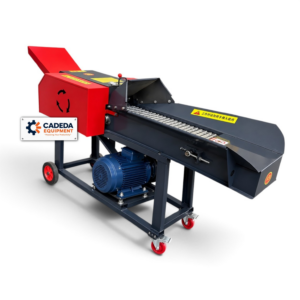
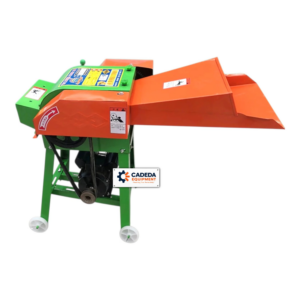
🔘 Capacity: 4.8tons per hour
🔘 Engine: 8HP diesel engine
🔘 Chopping Blades: 6 heavy-duty blades
🔘 Fining Blades: For finer chopping results
🔘 Conveyor Belt: Stainless steel construction for durability
🔘 Speed Gearbox & Lever: Allows speed adjustment
🔘 Dimensions: L 1,830mm × W 1,000mm × H 1,000mm
🔘 Weight: 278kg
KSh 190,000
Off-grid farms, leased land far from a transformer, and dairy units that simply cannot afford a power outage on chopping day all have the same requirement: a chaff cutter that runs on its own fuel supply. The 4.8 Ton/Hr Diesel Chaff Cutter is Cadeda’s answer — an 8HP diesel-engine-driven silage chopper built for commercial-scale Napier grass, maize stalk, and sugarcane top processing without a single dependency on the national grid or a backup generator.
At 4.8 tons of chopped fodder per hour, this is one of the higher-capacity diesel units in Cadeda’s range, intended for dairy cooperatives, medium and large dairy herds, and commercial fodder-chopping contractors who move volume every single day rather than a wheelbarrow-load at a time. The 8HP diesel engine is matched to six heavy-duty chopping blades plus a set of fining blades, so the machine handles both a rough first pass on thick maize stalks and a finer secondary chop for material headed straight into a silage pit or a feed trough. Chopping length is adjustable, which matters more than it sounds — younger dairy cows and calves do better on a shorter chop, while mature beef cattle can handle (and waste less of) a slightly longer cut.
The frame measures 1,830mm long, 1,000mm wide, and 1,000mm high, and the whole unit weighs in at 278kg — heavy enough to stay planted during high-volume chopping, but still mounted so two people can reposition it around the farm without a forklift. The conveyor belt feeding material into the blades is stainless steel, chosen specifically because it holds up to acidic plant sap and repeated wet-fodder contact far better than painted mild steel, which corrodes and eventually seizes at the rollers. The cutting drum and blade housing are built from a heavy-duty steel frame designed to absorb the vibration of continuous diesel-driven operation without loosening bolts or cracking welds after a season of daily use.
| Engine | 8HP diesel engine |
| Capacity | Up to 4.8 tons of chopped fodder per hour |
| Blades | 6 heavy-duty chopping blades plus fining blades |
| Chop length | Adjustable, for silage or direct feeding |
| Dimensions (L×W×H) | 1,830mm × 1,000mm × 1,000mm |
| Weight | 278kg |
| Conveyor | Stainless steel feed belt |
| Power source | Diesel — no electricity connection required |
A diesel chaff cutter also sidesteps a cost that electric buyers often underestimate in Kenya: the price of running a backup generator every time KPLC power drops during peak chopping hours. With this machine, chopping day is never held hostage to grid reliability — you fuel it, start it, and feed it. Cadeda delivers the 4.8 Ton/Hr Diesel Chaff Cutter countrywide, with our technicians handling first-start setup, blade-tensioning checks, and a walkthrough of the recommended service intervals for the diesel engine (oil changes, air filter checks, and injector servicing) so the unit keeps performing at rated capacity season after season.
Buyers comparing this machine against the electric 4.5 Ton/Hr model often ask which one actually costs less to run over a full year, and the honest answer depends on your farm’s specific power situation. If you already have a stable grid connection and pay standard KPLC commercial rates, the electric version typically wins on running cost per ton chopped. But that comparison collapses the moment power becomes unreliable — every hour lost to an outage on chopping day is a cost the electric buyer rarely accounts for until it happens repeatedly during a wet season when Napier grass is growing fastest and needs cutting most urgently. The diesel engine’s water-cooled design also means it tolerates continuous multi-hour operation better than air-cooled alternatives, staying within safe operating temperature even on a hot afternoon of back-to-back chopping runs. Genuine spare blades, drive belts, and engine filters for this model are stocked by Cadeda locally rather than shipped in on request, which is the difference between a two-day repair and a two-week one when something eventually needs replacing after heavy seasonal use.
Quality farm equipment in Kenya — chaff cutters, incubators, poultry cages, feed mills, engines and water pumps, delivered nationwide with free consultation, installation and after-sales support.
Copywrite© 2026 | All rights reserved