
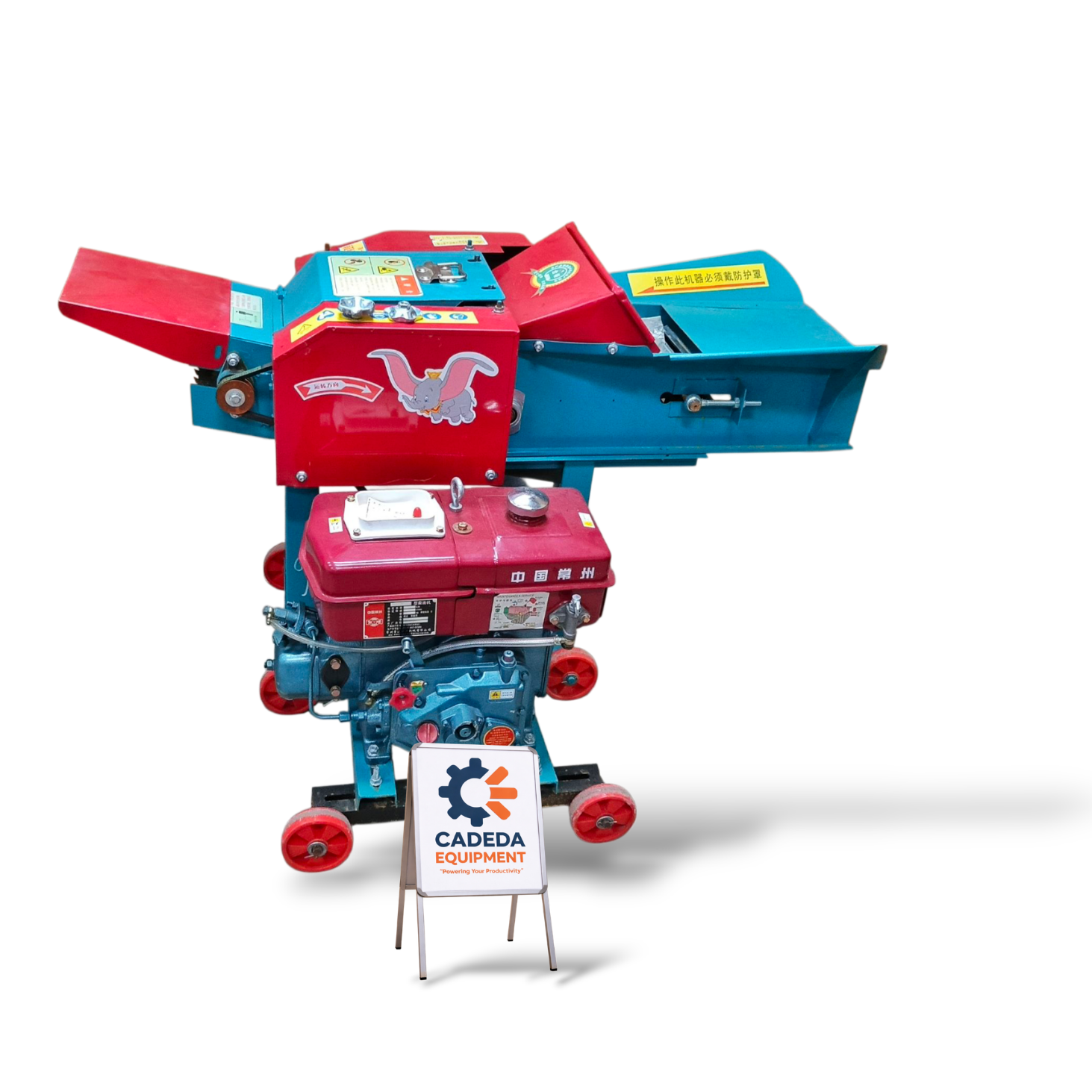
🔘 Capacity: 2.5tons per hour
🔘 Engine: 6HP water cooled diesel engine
🔘 Chopping Blades: 6 heavy-duty blades
🔘 Fining Blades: For finer chopping results
🔘 Conveyor Belt: Stainless steel construction for durability
🔘 Speed Gearbox & Lever: Allows speed adjustment
🔘 Dimensions: 110L × 80W × 90H cm
🔘 Weight: 160kg
KSh 139,000
The 2.5 Ton/Hr Diesel Chaff Cutter is Cadeda’s mid-range fodder chopper, built for farms that need diesel independence — no grid connection, no power rationing schedule to work around. Powered by a 6HP water-cooled diesel engine, it gives small and medium dairy operations, goat and sheep units and mixed livestock farms a dependable, fuel-driven way to prepare Napier grass, hay and maize stalks for both silage and direct feeding.
Water-cooled diesel engines run cooler and more consistently under sustained load than air-cooled alternatives, which matters on a machine expected to run for hours at a stretch during chopping season. The cutting drum carries six heavy-duty blades along with fining blades for a finer secondary pass and both wet and dry fodder are handled without needing to swap components — feed in fresh-cut Napier grass in the morning and drier maize residue in the afternoon and the machine adjusts via its speed-control lever and gearbox rather than requiring a blade change.
At 160kg, this is a genuinely portable diesel chaff cutter — light enough for two people to reposition between paddocks or load onto a pickup for use across multiple plots, while still solid enough not to walk or vibrate excessively during operation. The conveyor belt is stainless steel, a deliberate choice given how much moisture and plant acid passes over it daily; a mild-steel belt in the same role would start rusting and staining fodder within a season. Speed and chop consistency are managed through the gearbox and control lever, letting one operator fine-tune output without stopping the engine.
| Engine | 6HP water-cooled diesel engine |
| Capacity | Up to 2.5 tons per hour |
| Blades | 6 heavy-duty blades plus fining blades |
| Conveyor | Stainless steel belt |
| Speed control | Gearbox with adjustment lever |
| Weight | 160kg |
| Power source | Diesel — no electricity required |
| Suitable material | Napier grass, hay, maize stalks — wet or dry |
Because it needs nothing but diesel and a level patch of ground to work, this chopper is often the first mechanised fodder solution a growing dairy farm invests in — it removes hours of manual panga-chopping labour per week while staying within a mid-range budget. Cadeda ships the 2.5 Ton/Hr Diesel Chaff Cutter to every county in Kenya, and our technicians run a first-start check, confirm correct blade tensioning, and walk your team through the diesel engine’s basic service routine — oil, filters, and coolant — before handover.
Farmers deciding between this model and the smaller 1 Ton/Hr Petrol Chaff Cutter should weigh growth plans as much as current herd size. A 6HP diesel engine costs more upfront than a 7.5HP petrol unit of similar chopping capacity, but diesel engines generally deliver a longer service life under continuous commercial use, and the fuel-efficiency advantage of diesel over petrol becomes more pronounced the more hours per week the machine actually runs. For a dairy farm planning to grow from 13 cows over the next few seasons, buying the 2.5-ton diesel model now avoids a second equipment purchase later. The water-cooled engine design is also worth noting specifically for farmers in Kenya’s hotter lowland regions, where an air-cooled alternative would be more prone to overheating during long, continuous chopping sessions in direct sun.
Quality farm equipment in Kenya — chaff cutters, incubators, poultry cages, feed mills, engines and water pumps, delivered nationwide with free consultation, installation and after-sales support.
Copywrite© 2026 | All rights reserved


